Work Outfit Formulas for Real Weekdays
Build a repeatable work outfit around a tailored layer, comfortable base, sensible shoes and the dress code you actually have.
The outfit formula, not a uniform
A useful work outfit needs to survive more than the first five minutes in the mirror. It should make sense at your desk, on a commute, in a meeting and on the way home. The answer is not a closet full of formal clothes. Start with a repeatable formula: one structured piece, one comfortable base, one considered shoe and a bag that holds what you actually carry. Change one element and the same formula feels new without demanding another shopping trip.
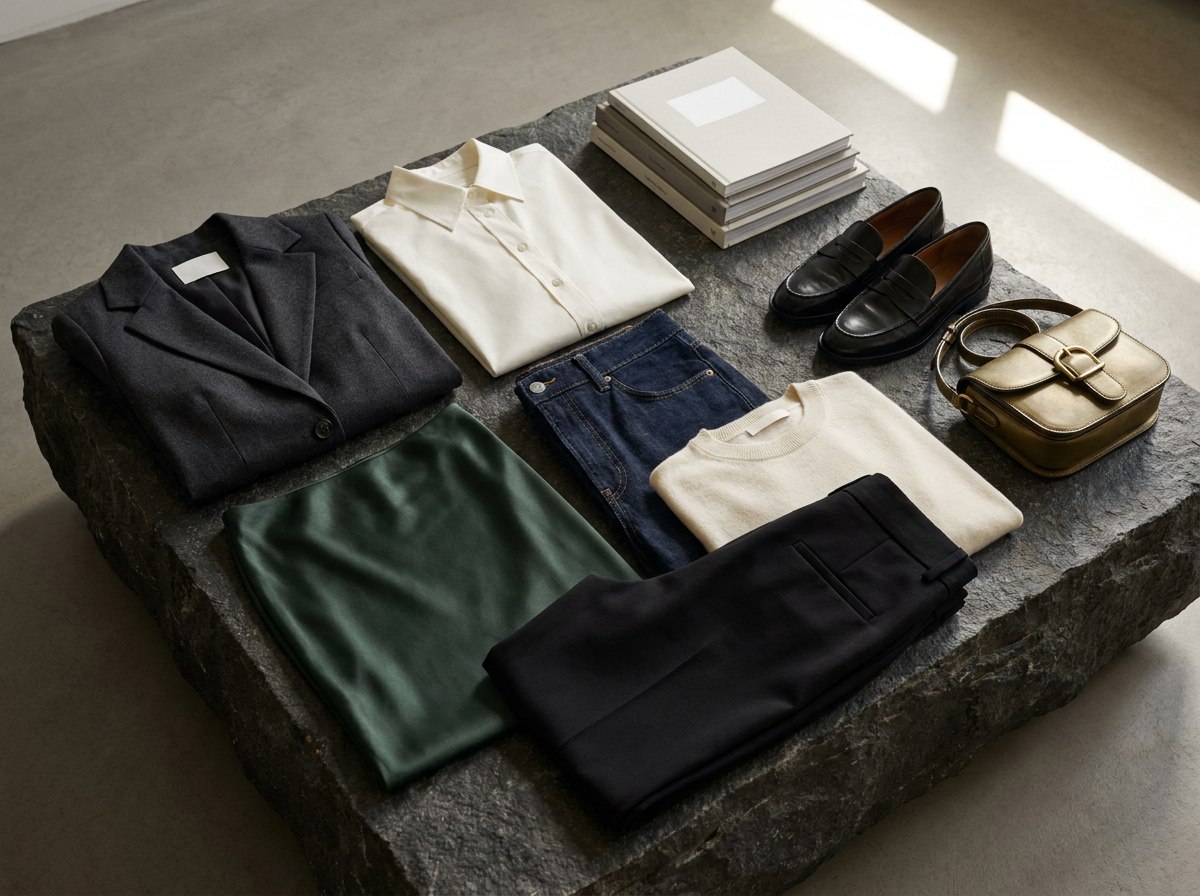
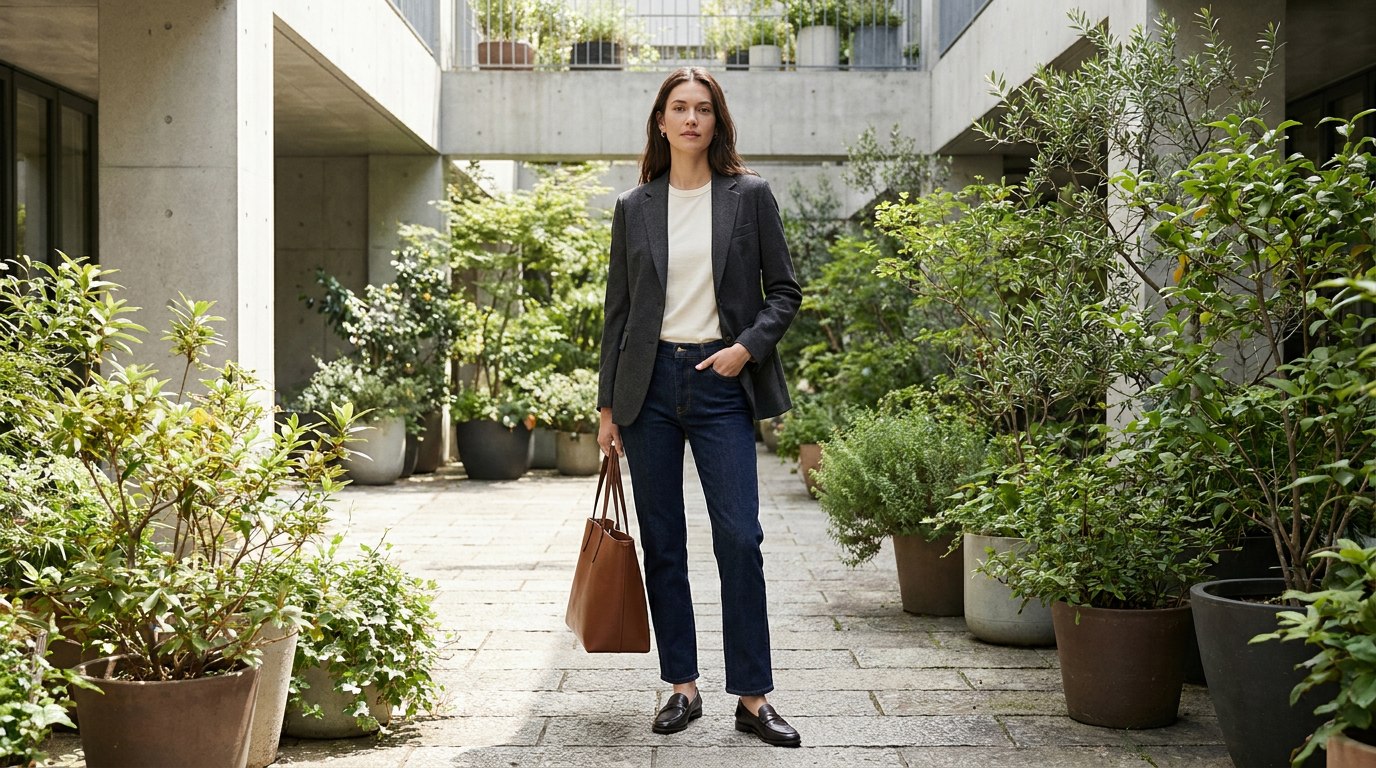
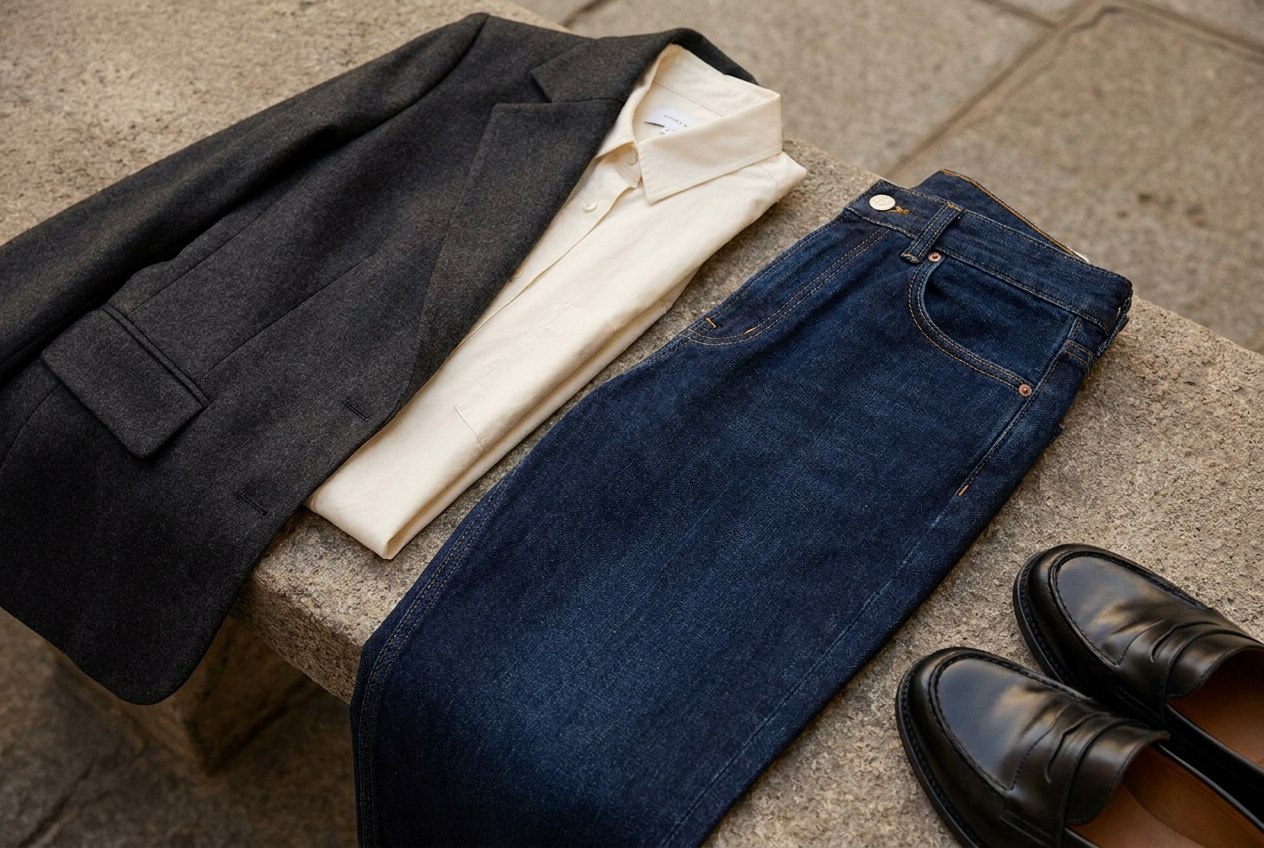
Think of a charcoal blazer over an ivory tee, straight dark jeans and polished loafers. This is not the only acceptable work look, and your workplace may have different rules. It is a starting point you can adjust to your climate, dress code and taste. If jeans are not appropriate, swap in tailored trousers. If a blazer feels too stiff, try an unlined jacket with a similar clean shoulder. The important part is the relationship between pieces, not a prescribed shopping list.
Start with the dress code you really have
Before buying anything, look at what people wear on an ordinary Tuesday rather than at an interview or special event. Is your day mostly seated, on your feet, in a cold office or moving between temperatures? Do you need pockets? Are there written rules about denim, sleeves or shoes? A beautiful outfit that ignores these conditions becomes a garment you avoid. Write down the three most common situations you dress for. Build for those first.
For a relaxed office, a knit or tee with a tailored layer can carry the outfit. For a more formal setting, a button-front shirt and trousers may be the better base. In a creative workplace, interesting proportions or a single strong colour can do more than a rigid suit. Keep the visual intention — a clean line, a sensible fit, and one point of interest — while changing the level of formality.
Choose an anchor that does the work
The anchor is the piece that makes your outfit look deliberate. A well-fitting blazer is an obvious choice, but a crisp shirt, structured vest or beautiful trousers can do the same job. Judge it while standing, sitting and reaching forward. A jacket should close without pulling, its shoulder should sit where intended, and the sleeves should let you move. If the garment only looks good while you stand perfectly still, it is not a practical anchor.
Look at fabric under daylight. Lightweight linen has a lovely lived-in texture but may crease on a long commute; a densely woven cotton or a wool blend can hold a cleaner line. Price alone does not guarantee quality. Check whether the seams lie flat, buttons feel secure and the garment returns to shape after you gently scrunch a small section in your hand. The aim is not perfection, just honesty about how a piece behaves in real life.
Make the base easy to repeat
Put two or three bases under your anchor: perhaps an ivory cotton shirt, a fine dark knit and a soft tee with an opaque neckline. Each should work with the same trousers or jeans. That small compatibility test is more useful than asking whether a new top is fashionable. If it cannot make at least two complete outfits with what you already own, pause before purchasing it.
Fit matters more than a label on a hanger. A top that bunches under your jacket adds visual noise; one that pulls across the chest will be distracting all day. Check the neckline and hem together. When the top is tucked, does it stay put? When worn loose, does the length interrupt the line of the jacket? Try both ways with your actual bottoms, not just in isolation.
Trousers, denim and the right hem
Choose the bottom around your daily movement. Straight trousers give the blazer a clean continuation. Dark, un-distressed jeans can relax it if your workplace permits them. Wide-leg trousers need a deliberate hem and enough ease at the seat; straight jeans should not drag beneath the shoe. Have hems adjusted if a near-perfect pair fails only at the ankle. This small alteration often makes more difference than replacing the whole outfit.
Do not force every item to match exactly. A charcoal jacket, deep navy trousers and an ivory shirt can look coherent because their tones are close and the light top creates a purposeful break. Repeat a colour once — black shoes with a black belt, for example — and the combination reads as considered. Add a single accent, such as a muted green scarf or burgundy bag, if your basics feel flat.
Shoes and bag are part of the plan
The best work shoes are the ones you can wear through your actual day. Loafers, low block heels and refined flats each work if the fit is right and the sole suits your commute. Test them after walking rather than judging them from a photograph. Choose a bag by contents: laptop, water bottle, keys and whatever else must come with you. A beautiful small bag that cannot do the job is not an everyday work bag.
Accessories should finish rather than rescue an outfit. One cuff, watch, scarf or necklace can create focus. If your shirt has a busy print or your jacket has strong hardware, you may need nothing additional. Put everything on, then remove the item that seems to be competing for attention. This is editing, not restraint for its own sake.
Three ways to wear the same foundation
For a meeting day, pair tailored trousers, a smooth knit and a blazer with loafers. For a regular office day, use the same blazer with dark jeans and a tucked cotton tee, provided denim is allowed. For a warmer or less formal day, exchange the blazer for a crisp oversized shirt worn open over a fitted base. The common thread is proportion: a roomy outer layer asks for a cleaner shape beneath, while relaxed trousers often need a more defined top.
On Sunday, set out the anchor and three possible bases. Try each with the bottoms and shoes you already have. Photograph the combinations that pass the sitting, walking and daylight tests. Save those photos for mornings when you have no time to experiment. If one piece keeps failing, identify why — colour, fit, maintenance or dress code — before buying a replacement.
The result is not a perfect capsule for everyone. It is a personal work-outfit system, built from your real week. Start with one combination that feels good at 9 a.m. and still makes sense at 6 p.m. Repeat it, adjust it, and let usefulness decide what earns space in your wardrobe.
Please share this article with your loved ones!
One click sends it straight to their phone.

Written by
Jevon Max
Founder & lead curator, Zingy Babe
Jevon founded Zingy Babe to make getting dressed simpler: timeless personal style over passing trends, capsule wardrobes over overflowing closets, and honest fashion guides tested against real life. Every article and tool on this site comes from that same belief — fewer, better pieces, worn with confidence.
Some outbound links may be affiliate links. Affiliate disclosure.
Fashion tools